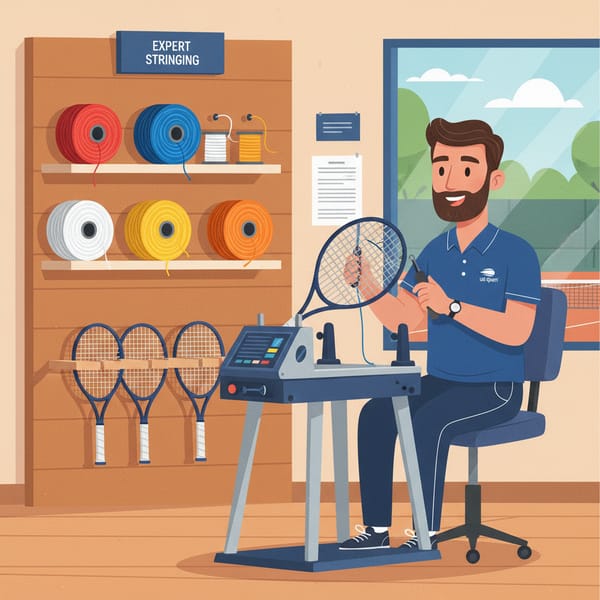
Strings matter more than most tennis parents realize. You can spend a fortune on the perfect racquet, but if the strings aren’t right, performance suffers. For junior players especially, choosing appropriate strings can affect their development, comfort, and even injury prevention.
Not sure where to start? Try our String Selector Tool to get personalized recommendations based on your child’s age, skill level, and playing style. Or browse our complete Tennis String Guide with 60+ detailed reviews.
Here’s what you need to know about selecting strings for your junior player.
Types of Tennis Strings
Synthetic Gut
Synthetic gut strings are made from nylon and are the most common choice for junior players. They offer a good balance of power, durability, and affordability—typically $15-25 to string.
Best for: Beginners and intermediate players who need a reliable, affordable option.
Multifilament
Multifilament strings are softer and more comfortable than synthetic gut. They’re made from hundreds of tiny fibers woven together, providing better feel and less shock to the arm.
Best for: Players with arm sensitivity or those seeking more comfort and feel.
Polyester
Polyester strings are the choice of many advanced and professional players. They’re extremely durable and provide excellent spin and control. However, they’re stiffer and can be harsh on the arm if used incorrectly.
Best for: Advanced juniors with full swings who want maximum spin and control. Not recommended for beginners or players with arm issues.
Natural Gut
Natural gut strings (made from cow intestine) offer the best feel, power, and comfort. They’re also the most expensive and least durable. Few junior players need natural gut.
Best for: Elite players or those with arm problems who need the absolute best comfort.
Hybrid Setups
Hybrid stringing uses two different string types—typically polyester in the mains (vertical strings) and a softer string in the crosses. This provides some benefits of both materials.
Best for: Intermediate to advanced players looking to balance spin/control with comfort.
How to Choose the Right Strings
Consider Your Child’s Level
- Beginners: Synthetic gut is perfect. It’s forgiving, affordable, and performs well. There’s no reason to spend more at this stage.
- Intermediate players: Synthetic gut still works well. Consider multifilament if comfort is a priority, or try a hybrid setup if your child wants more spin.
- Advanced players: Polyester or hybrid setups become appropriate once your child generates enough racquet head speed to benefit from the extra control and spin.
Think About Playing Style
- Power players: Thicker gauge strings (16 or 16L) provide more control and durability to handle big swings.
- Touch players: Thinner gauge strings (17 or 18) offer more feel and spin but break faster.
- All-around players: Mid-gauge (16L or 17) provides a balance.
Account for Physical Development
Junior players are still developing physically. Stiff strings like pure polyester put more stress on the arm, elbow, and shoulder. Unless your child is an advanced player with sound technique and no history of arm problems, lean toward softer options.
If your child ever complains of arm pain, switch to a softer string and lower the tension immediately. Tennis elbow isn’t just an adult problem.
Consider String Gauge
Gauge refers to string thickness:
- 15/15L gauge: Thickest, most durable, least feel
- 16/16L gauge: Good durability with reasonable feel
- 17 gauge: Balance of feel and durability
- 18 gauge: Thinnest, best feel and spin, breaks fastest
For most juniors, 16 or 17 gauge is appropriate. Thicker gauges last longer, which matters when you’re paying for restrings.
String Tension
Tension affects how the ball comes off the strings:
- Higher tension: More control, less power, firmer feel
- Lower tension: More power, less control, softer feel
For junior players, stay in the middle to lower end of the racquet’s recommended tension range. Lower tensions are more forgiving and easier on the arm. As your child develops and wants more control, tension can increase gradually.
A typical starting point for juniors might be 50-55 pounds, but follow the racquet manufacturer’s recommendations.
Popular String Choices for Juniors
Budget-Friendly Synthetic Gut
- Wilson Synthetic Gut Power: Reliable, affordable, widely available
- Prince Synthetic Gut with Duraflex: Good all-around performance with added durability
- Gosen OG-Sheep Micro: Legendary Japanese synthetic since 1981, exceptional value
Comfortable Multifilament
- Tecnifibre X-One Biphase: Premium comfort and feel
- Head Velocity MLT: Soft and arm-friendly
- Wilson NXT: Excellent comfort at a higher price point
Advanced Player Polyester
- Babolat RPM Blast: Popular among spin-heavy players, used by Nadal
- Luxilon ALU Power: The gold standard for control-oriented players
- Solinco Tour Bite: Excellent spin potential with square profile
For most junior players, synthetic gut is the right choice. Save the premium strings for when your child is advanced enough to notice the difference. See our full string comparison guide to explore all options.
Stringing and Maintenance
How Often to Restring
Strings lose tension over time even without breaking. A common rule: restring as many times per year as you play per week. If your child plays three times a week, restring at least three times per year.
Active tournament players may need to restring monthly or even more frequently.
Signs Your Strings Need Replacing
- Visible notching where strings cross
- Loss of tension (the stringbed feels “dead”)
- Strings moving around and not snapping back into place
- Noticeable drop in spin or control
Finding a Good Stringer
Quality stringing matters. Ask at local tennis clubs for recommendations. A good stringer will:
- Use proper equipment and technique
- String at the exact tension you request
- Offer advice on string selection
Expect to pay $15-30 for labor, plus string costs.
Storing Racquets Properly
Extreme temperatures damage strings. Don’t leave racquets in hot car trunks or freezing garages. Store them at room temperature.
Common Mistakes to Avoid
Using Adult Player Strings Too Early
Just because a pro uses Luxilon doesn’t mean your 10-year-old should. Advanced strings require advanced technique to benefit from—and they’re harder on developing arms.
Ignoring Tension Changes
When switching string types, adjust tension accordingly. Polyester plays stiffer than synthetic gut at the same tension, so drop tension 5-10% when trying poly for the first time.
Waiting Too Long to Restring
Dead strings hurt performance and can contribute to arm problems. Regular restringing is maintenance, not luxury.
Overthinking It
For the average junior player, the difference between string brands is minimal. Pick a good synthetic gut, string at a reasonable tension, and focus on playing tennis.
Conclusion
String selection doesn’t need to be complicated. For most juniors, synthetic gut strung at mid-range tension is the right choice. It’s affordable, performs well, and is gentle on developing arms.
As your child advances, you can experiment with multifilament for comfort, polyester for spin and control, or hybrid setups for a combination. Pay attention to how strings feel and how long they last.
The most important thing is keeping your child on the court with equipment that performs well and doesn’t cause injury. Get the strings right, and the rest follows.
Ready to find the perfect string? Use our String Selector Tool for personalized recommendations, or explore our complete string database with detailed reviews of 60+ strings from top brands like Luxilon, Babolat, Wilson, and more.