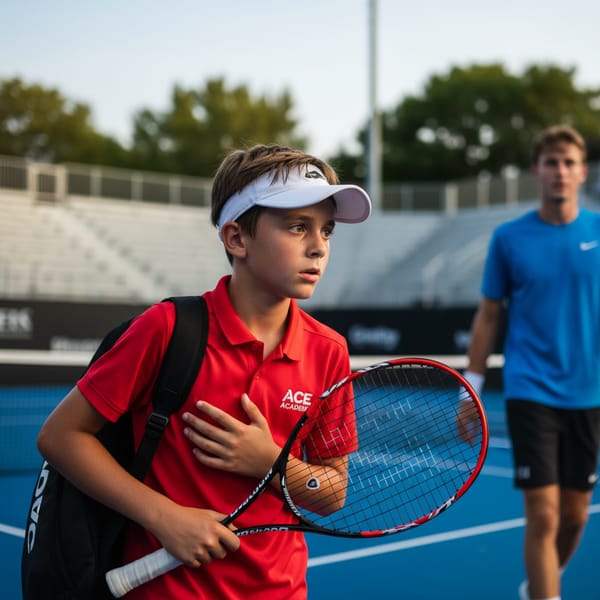
Tennis is both a physical and mental game. As a parent, you can help your child prepare for competitive matches in ways that go far beyond just hitting balls on the court.
This guide covers the key areas of match preparation: mental, physical, technical, tactical, and emotional. By addressing each area, you’ll give your child the best chance of performing at their peak when it matters.
Mental Preparation
Tennis is often called a mental sport, and for good reason. Your child will face pressure, frustration, and momentum swings—all while making split-second decisions. Here’s how to help them prepare mentally.
Build Confidence Through Visualization
Encourage your child to visualize themselves playing well before matches. Have them picture hitting clean forehands, serving aces, and winning tight points. This mental rehearsal builds confidence and helps them feel prepared for different scenarios.
Develop Positive Self-Talk
What kids say to themselves during matches matters enormously. Teach your child to focus on what they can do rather than dwelling on mistakes. Simple phrases like “next point” or “I’ve got this” can reset their mindset after errors.
Manage Pre-Match Nerves
Nerves before a match are completely normal—even professional players get them. Help your child develop coping strategies:
- Take slow, deep breaths to calm their nervous system
- Focus on the present moment rather than worrying about outcomes
- Channel nervous energy into focused intensity
Set Realistic Goals
Work with your child to set process-based goals rather than outcome-based ones. Instead of “I want to win,” try “I want to stay aggressive on my forehand” or “I want to recover quickly after mistakes.” This keeps them focused on things within their control.
Develop a Pre-Match Routine
A consistent routine before matches helps players get into the right headspace. This might include a specific warm-up sequence, listening to certain music, or eating the same pre-match snack. The familiarity creates comfort and focus.
Physical Preparation
Tennis demands speed, agility, endurance, and power. Physical preparation ensures your child’s body is ready for the demands of competition.
Nutrition and Hydration
A balanced diet fuels performance. On match days, your child should eat familiar foods that provide sustained energy—avoid trying anything new. Hydration is equally important: encourage drinking water throughout the day, not just during the match.
Proper Warm-Up
A good warm-up prevents injuries and primes the body for explosive movements. This should include:
- Light jogging to raise heart rate
- Dynamic stretches (leg swings, arm circles)
- Practice strokes starting slow and building intensity
- A few serves at increasing power
Cool-Down and Recovery
After matches, light stretching and cool-down exercises help prevent soreness and speed recovery. This is especially important during tournaments with multiple matches in a short period.
Building Tennis Fitness
Long-term physical development should include:
- Cardiovascular endurance: Running, cycling, or swimming
- Strength training: Age-appropriate exercises focusing on core, legs, and upper body
- Flexibility: Regular stretching to improve range of motion and prevent injuries
- Footwork drills: Ladder drills, cone exercises, and lateral movement practice
Rest and Injury Prevention
Rest is when the body repairs and strengthens. Ensure your child gets adequate sleep, especially before competitions. If they experience pain or injury, address it promptly—playing through pain often makes things worse.
Technical Preparation
Technical preparation means ensuring your child’s strokes are match-ready.
Practice All the Shots
Matches require the full arsenal: forehands, backhands, volleys, serves, overheads, and returns. Practice sessions should cover all these shots, not just favorites.
Focus on Footwork
Good footwork is the foundation of good strokes. Emphasize getting into position early, split-stepping before returns, and recovering to the center after shots.
Work on Consistency Under Pressure
Practice situations that simulate match pressure. Tie-break practice, serving under pressure, and playing out points from specific scores all help translate practice skills to match performance.
Play Different Opponents
Practicing against varied playing styles prepares your child for the range of opponents they’ll face in tournaments. Seek out practice partners who play differently—pushers, aggressive baseliners, net rushers.
Tactical Preparation
Having a game plan gives your child direction and confidence.
Study the Opponent
If possible, learn about upcoming opponents. Do they have a weak backhand? Do they struggle with high balls? Do they get frustrated easily? This information helps shape a tactical approach.
Develop Default Patterns
Your child should have go-to patterns they can rely on when uncertain. For example: “When in doubt, hit deep to the backhand” or “On big points, serve wide in the deuce court.” These defaults reduce decision-making pressure.
Plan for Adversity
Discuss what to do when things aren’t going well. If the first strategy isn’t working, what’s Plan B? Having contingencies prevents panic when the original approach fails.
Analyze Matches
After matches, review what worked and what didn’t. This reflection—done constructively, not critically—helps your child learn from experience and prepare better for future matches.
Emotional Preparation
Tennis is an emotional rollercoaster. Helping your child manage their emotions is crucial for consistent performance.
Approach Matches with the Right Attitude
Encourage your child to focus on competing hard and enjoying the challenge rather than just winning. A positive attitude toward competition reduces anxiety and often leads to better results anyway.
Handle Frustration Constructively
Missed shots, bad calls, and unlucky bounces happen. Teach your child to acknowledge frustration briefly, then let it go. Dwelling on negatives affects the next point.
Build Resilience
Losing is part of tennis. Help your child see losses as learning opportunities rather than failures. The ability to bounce back from defeat is essential for long-term development.
Celebrate the Right Things
Praise effort, attitude, and improvement—not just wins. When your child competes hard and maintains composure in a loss, that deserves recognition just as much as a trophy.
Match Day Checklist
The night before and morning of a match:
- Pack equipment: racquets, extra grips, water bottle, towel, snacks
- Lay out clothes and shoes
- Get adequate sleep
- Eat familiar foods at regular times
- Arrive early enough to warm up properly
- Go through the pre-match routine
Conclusion
Preparing your child for competitive tennis involves more than just hitting balls. Mental, physical, technical, tactical, and emotional preparation all contribute to match performance.
The goal isn’t to create a robot who follows a rigid system. It’s to develop a well-rounded player who shows up prepared, competes with confidence, handles adversity well, and continues improving regardless of results.
Most importantly, remember that competitive tennis should still be enjoyable. While winning matters, the skills your child develops through competition—discipline, resilience, problem-solving, handling pressure—are valuable far beyond the tennis court.